Why Every UAE Website Needs an SSL Certificate
If you run a business in the UAE, an SSL certificate UAE customers can trust is no longer optional. It is the small padlock that appears next to your web address, and it tells every visitor that the connection between their browser and your website is encrypted. Without it, browsers like Chrome and Safari now display a blunt "Not secure" warning that scares away shoppers before they ever see your products. For a Dubai retailer, a Sharjah clinic, or an Abu Dhabi consultancy, that warning is the digital equivalent of a locked, unlit shopfront.
This guide explains what SSL does, why it matters specifically for UAE businesses, and how to make sure your site is fully protected.
What an SSL Certificate Actually Does
SSL stands for Secure Sockets Layer. In plain terms, it scrambles the information that travels between your website and your visitor so that nobody in between can read it. When someone types a password, a phone number, or a card detail on your site, SSL turns that data into unreadable code while it moves across the internet.
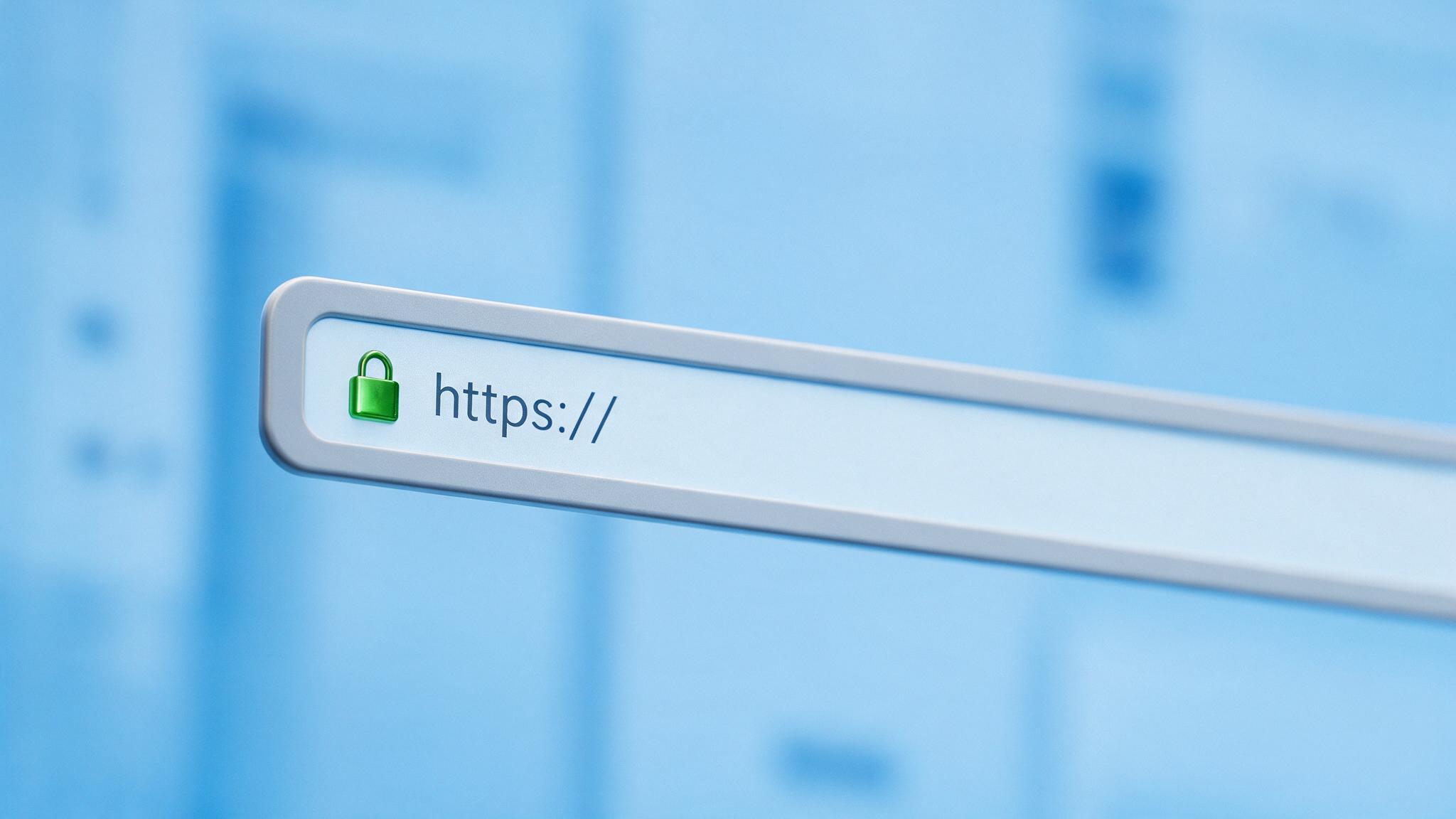
You can spot an active certificate in three ways:
- The web address starts with https rather than http.
- A padlock icon appears in the browser address bar.
- The "Not secure" label disappears from view.
Why SSL Matters for UAE Businesses
1. It Protects Customer Trust
UAE consumers are among the most active online shoppers in the region. They compare, they research, and they abandon anything that feels unsafe. A visible padlock signals that you take their privacy seriously. A missing one suggests the opposite, even if your business is completely legitimate.
2. It Supports Data Protection Expectations
The UAE Personal Data Protection Law sets clear expectations that businesses handling personal information use appropriate technical safeguards. Encrypting data in transit with SSL is one of the most basic and widely recognised of those safeguards. If you collect names, emails, or booking details, HTTPS is a sensible first step toward compliance.
3. It Improves Google Rankings
Google has confirmed that HTTPS is a ranking signal. When two similar sites compete for the same search term in the UAE, the secure one has an edge. Given how competitive terms like "hosting Dubai" or "clinic Abu Dhabi" already are, you cannot afford to give away that advantage.
4. It Enables Modern Payment and Login Features
Many payment gateways used across the UAE will not process transactions on an unsecured page. Browser features such as saved passwords and autofill also behave better on HTTPS. If you plan to sell online or let customers log in, SSL is a technical requirement, not a nice extra.
A padlock costs you very little. A lost sale, a leaked record, or a damaged reputation costs far more.
Types of SSL Certificates
Not all certificates are the same, and choosing the right level keeps costs sensible.
- Domain Validated (DV): Confirms you control the domain. Fast, affordable, and perfect for blogs, brochure sites, and most small businesses.
- Organisation Validated (OV): Verifies your business details as well. A good fit for established companies that want extra assurance.
- Extended Validation (EV): The highest level of vetting, often used by banks and large e-commerce brands handling significant transactions.
Most UAE small businesses do very well with a DV certificate. If you handle sensitive records or high transaction volumes, consider OV or EV.
How to Add SSL to Your Website
The good news is that adding SSL is straightforward, especially on quality UAE hosting.
- Choose a hosting plan that includes SSL, ideally at no extra cost.
- Install and activate the certificate from your hosting control panel.
- Update your site links to use https so nothing loads insecurely.
- Set up an automatic redirect so every visitor lands on the secure version.
On a well configured host, this can take minutes rather than hours. Many providers now issue and renew certificates automatically, so you never have to think about expiry dates.
Common SSL Mistakes to Avoid
- Mixed content: Loading images or scripts over http on an https page. This breaks the padlock. Update every link.
- Letting certificates expire: An expired certificate triggers a full-page warning. Use automatic renewal.
- Skipping the redirect: If both http and https versions load, some visitors still see the insecure page. Force the secure version.
Frequently Asked Questions
Do I need SSL if I do not sell anything online?
Yes. Even a simple brochure site collects data through contact forms, and browsers warn visitors on any http page. SSL protects trust regardless of whether you take payments.
Will SSL slow down my UAE website?
No. Modern encryption is extremely fast, and HTTPS often loads faster than http because it unlocks newer, more efficient web protocols.
How much does an SSL certificate cost in the UAE?
Prices range from free basic certificates to a few hundred AED per year for advanced validation. Many hosting plans include SSL at no extra charge, so most small businesses pay nothing for it.
Secure Your Website Today
An SSL certificate is the foundation of a trustworthy online presence in the UAE. It protects your customers, satisfies data protection expectations, and strengthens your position in Google search. There is simply no reason to leave your site exposed. Choose a hosting plan that includes SSL from day one and give every visitor the confidence to buy, book, and get in touch. Explore secure, SSL-ready hosting built for UAE businesses at Dirham A Day hosting and get your padlock up in minutes.
Ready to get online with a UAE host?
Fast local servers, free SSL, daily backups and support that answers. Set up in minutes.
See hosting plans